Root Canal Treatment Near Great Kingshill

If a tooth has been troubling you and you live in Great Kingshill, root canal treatment is available at Wycombe Dental Centre in High Wycombe. We assess the tooth, including with X-rays, and explain your options before any treatment begins. The aim is to clear the infection, help ease pain and save the natural tooth where possible.
Root Canal Treatment For Great Kingshill

Patients from Great Kingshill are seen for root canal treatment at our High Wycombe practice.

Great Kingshill is a village to the north of High Wycombe.

If you notice worrying tooth symptoms, early assessment at Wycombe Dental Centre helps us check whether root canal treatment could save the natural tooth. Root canal care is provided at our High Wycombe practice, and we arrange treatment and follow-up around the needs of the tooth; some cases are straightforward while others require further visits to make sure the infection is addressed and the tooth can be restored.

You can meet our dental team to learn more about who provides care at the practice.
image

What Root Canal Treatment Is And What It Aims To Do

Root canal treatment treats infection or inflammation inside a tooth. The main aims are to remove infected or inflamed tissue from the tooth’s pulp chamber and canals, help ease tooth pain linked to that infection, and preserve the natural tooth where it can still be predictably restored.

Preserving the natural tooth can avoid more complex tooth-replacement work in suitable cases and helps maintain chewing function. After the internal work is completed the tooth is restored with a filling or, if significant structure is lost, a crown to protect and support long-term function.
image

Signs That May Mean A Tooth Needs Attention

A tooth that needs attention can make itself known in different ways: an ache that keeps coming back, discomfort when you bite or chew, or a twinge from something hot or cold that takes a while to fade.

Other changes are easier to miss, such as a tooth that has darkened, swelling around the gum or face, an unpleasant taste or a deep cavity. Some infected teeth cause very few symptoms at all, so an examination and X-rays may be needed to see what is happening inside the tooth.
image

What Happens During Root Canal Treatment

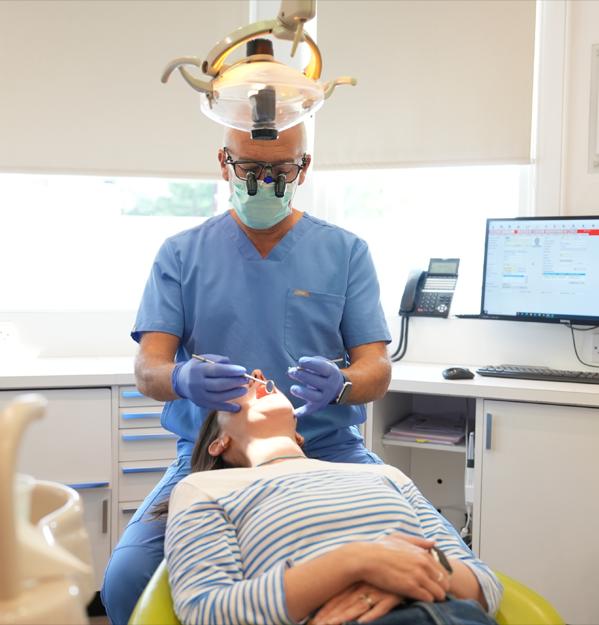
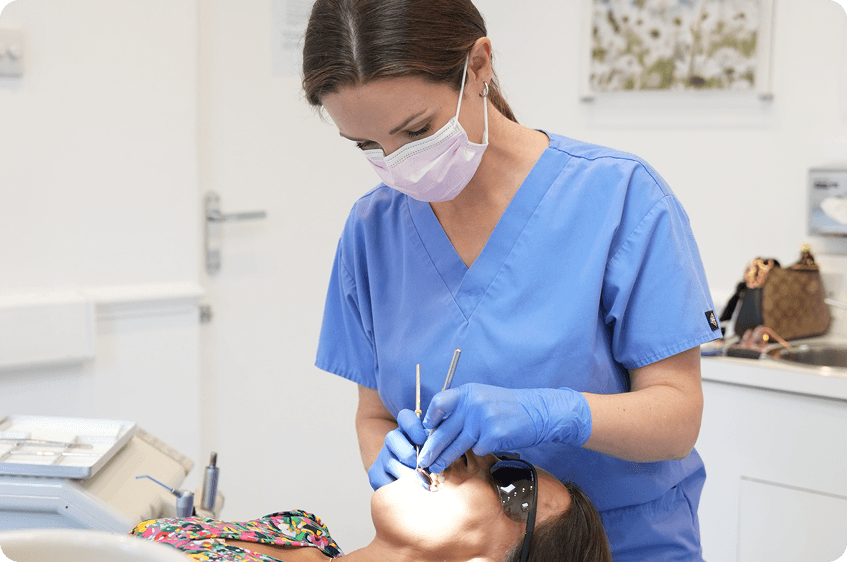
The dentist begins with an examination that usually includes X-rays to assess how extensive the infection is and the shape of the root canals. Local anaesthetic is used so the area is numb while the dentist removes the infected pulp, then cleans and shapes the canals to reduce bacteria and prepare them for sealing.

After cleaning, the canals are filled and sealed to help stop bacteria re-entering. The visible part of the tooth is then restored with a filling or a crown if more structure is needed. Some cases can be completed in a single appointment while others need more visits depending on the tooth and canal complexity; mild tenderness may follow and typically settles.
image

Who Is Suitable And How The Tooth Is Restored Afterwards

Suitability for root canal treatment depends on whether the tooth can be predictably restored after the internal infection is removed. The dentist will assess the tooth itself, surrounding bone and gum health, and how the tooth fits with your bite before recommending treatment. If the tooth is too badly damaged or cannot be restored reliably, alternative options will be discussed.

When treatment is suitable, the tooth is restored with a filling or a crown; a crown may be recommended if a significant amount of tooth structure has been lost. Saving the natural tooth can restore chewing function, help protect neighbouring teeth from extra strain and may reduce the need for tooth replacement in appropriate cases. The dentist will explain likely outcomes and any follow-up care after assessment.
image

What Affects The Cost Of Root Canal Treatment

The cost of root canal treatment depends on the tooth being treated, how complex the root canals are and whether a filling or crown is needed afterwards.

Before treatment, you will receive information about the stages involved and the fees, so you can decide with a clear picture. The number of visits depends on the tooth, the infection and the canals.

For current root canal pricing, please see our fee guide or contact the practice.
image

Visiting Our High Wycombe Practice

Root canal treatment is provided at Wycombe Dental Centre, 15 Amersham Hill, High Wycombe, HP13 6NR. If you are travelling from Great Kingshill, to the north of High Wycombe, your assessment, treatment and any follow-up visits all take place here.

We are open Monday and Friday from 8am to 4pm, and Tuesday to Thursday from 8am to 8pm, which gives some flexibility if your treatment needs more than one visit.

Telephone 01494 442922 if you would like to discuss root canal treatment or arrange an assessment.
image

Book A Root Canal Appointment

To arrange a root canal assessment near Great Kingshill, call 01494 442922 or contact our team. Appointments take place at Wycombe Dental Centre in High Wycombe.

Frequently Asked Questions

Yes. Root canal treatment for patients from Great Kingshill is provided at Wycombe Dental Centre in High Wycombe. Call 01494 442922 or contact the practice to arrange an assessment.

Some root canal treatments are completed in one visit and others need more. It depends on the tooth, the infection and how complex the canals are.

Not always. If a tooth is too badly damaged, cracked or cannot be restored predictably, another option may be discussed after the dentist has assessed it.

With good care and the right restoration, a treated tooth can continue to function well for many years. Regular check-ups help keep an eye on it.

A crown may be recommended if the tooth has lost a significant amount of structure. Your dentist will advise whether a filling or a crown is more suitable.

The cost depends on the tooth, how complex the root canals are and whether a filling or crown is needed afterwards. For current pricing, please see the Wycombe Dental Centre fee guide or contact the practice.

Get in touch

Our friendly team would love to hear from you.
Please tick this box to agree to our privacy policy before continuing.

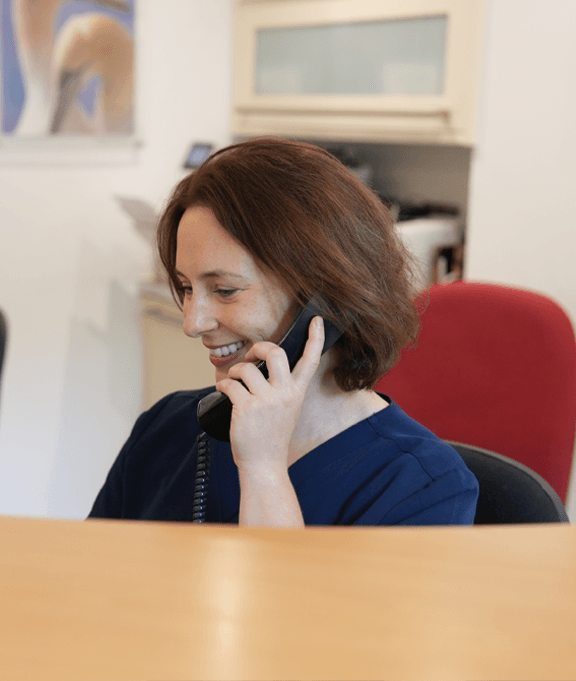
Dental receptionist answering a phone call

Opening Hours

Monday
08:00 AM - 04:00PM
Tuesday
08:00 AM - 08:00PM
Wednesday
08:00 AM - 08:00PM
Thursday
08:00 AM - 08:00PM
Friday
08:00 AM - 04:00PM
Saturday
CLOSED
Sunday
CLOSED